
T.E.C.C. - TACTICAL EMERGENCY CASUALTY CARE
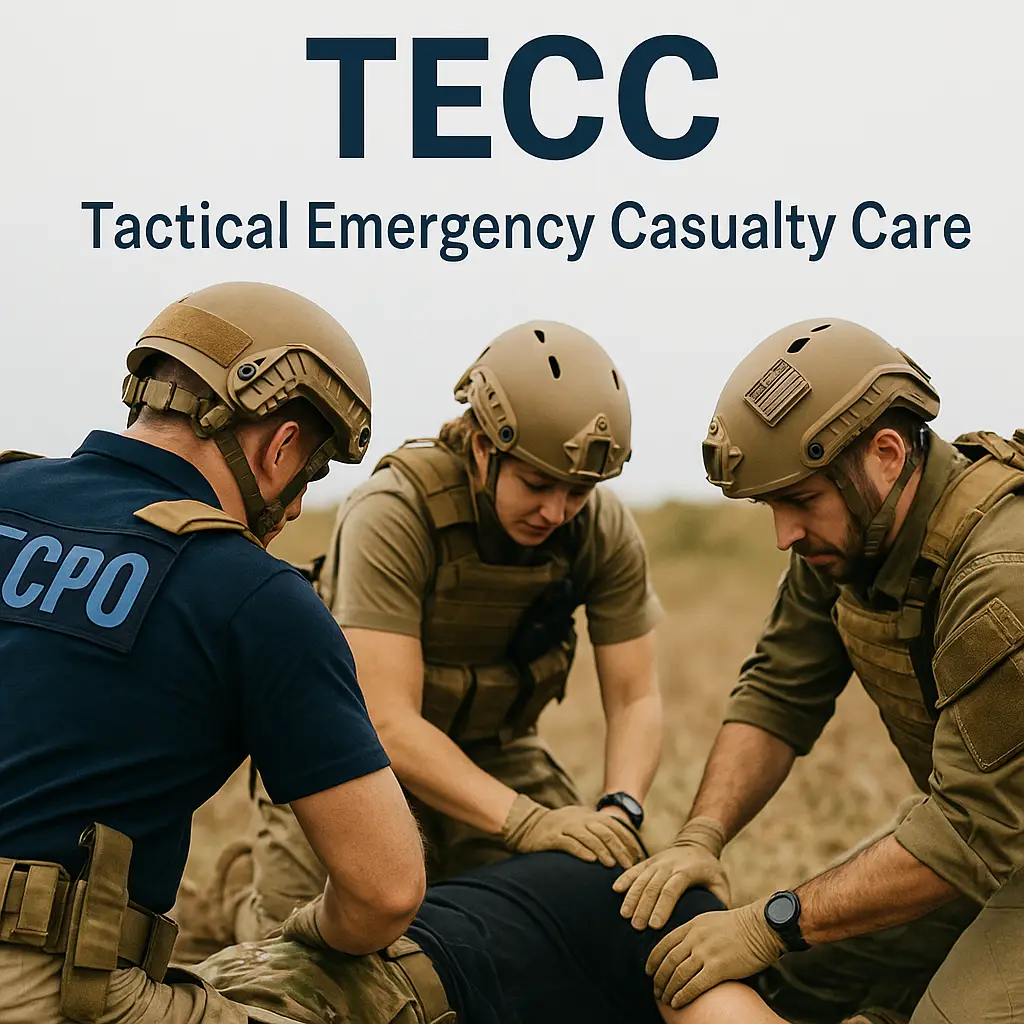
DESCRIPTION OF TRAINING
The training TECC Level 3 est une formation is a civil-operational training programme, based on the principles and guidelines of TCCC, adapted to civilian, tactical and operational contexts.
This training course enables participants to learn the essential techniques, reflexes and procedures for stabilising an injured person, particularly in cases of multiple trauma, in accordance with clear, prioritised guidelines structured around specific drills.
This training course is largely practical in nature, but also draws on theoretical knowledge of anatomy, physiology and traumatology. It aims to provide participants with a comprehensive understanding of patient care procedures in civilian, operational, hostile or degraded environments.
The training TECC Level 3 is developed by S.M.A.T. based on an operational, realistic approach tailored to medical care in tactical or degraded environments.
UNIT 1. Medical intervention in a tactical context
This unit introduces the principles of medical management in situations where scene safety, the threat or the operational environment directly influence the care of the injured.
- Understanding the principles of care in high-risk or unsafe environments.
- How to adapt your approach to casualty care to the threat
- Identify critical priorities in a tactical or degraded environment.
UNIT 2. Traumatic injuries
This module enables learners to recognise the main traumatic injuries encountered in civilian, operational or tactical contexts, and to adapt the initial management measures accordingly.
- Musculoskeletal injuries (fractures of arms, legs, pelvis, feet, skull)
- Chest injuries: use of the chest seal with a valve, recognising chest asymmetry, and principles of decompression in accordance with the scope of practice.
- Spinal cord injuries: recognising spinal trauma and the appropriate principles of immobilisation or extraction.
UNIT 3. Trauma Management
This module explores the assessment and management of major trauma in greater depth, focusing on life-threatening injuries and priorities for intervention.
Chest injury
- Identify and treat life-threatening chest injuries immediately.
- Recognising chest injuries requiring urgent medical attention.
- Understand that certain injuries may require ventilation, intubation or intensive care, depending on the level of expertise and the clinical context.
- Assess, identify and prioritise critical chest injuries.
Abdominal trauma:
- Understand the priorities for assessment and management of patients with blunt or penetrating abdominal trauma.
- Recognise the signs of instability that may require urgent surgical treatment.
- Understand the role of imaging and investigations in the diagnosis and follow-up of abdominal trauma victims.
Mechanisms and epidemiology of trauma:
- To identify the main mechanisms and types of injuries encountered in civilian, tactical or operational contexts.
- Understanding the impact of the time taken to provide treatment on the progression of traumatic injuries.
- To analyse the factors influencing treatment and disposal priorities.
Head injuries:
- Identifying and managing life-threatening head injuries.
- Recognising chest injuries requiring urgent medical attention.
- Understanding the management of patients with head injuries at every stage of care.
UNIT 4. Injury management
This unit covers the assessment, initial treatment and monitoring of injuries sustained in an operational context.
- Wound management and bleeding control.
- Head injuries and head trauma.
- Abdominal pain and suspected internal injury.
- The important differences between limb and pelvic injuries in the military environment compared to the civilian environment.
- How to assess and treat limb and pelvic injuries
UNIT 5. Splints and immobilisation
This unit covers the use of devices for immobilising and stabilising limbs in the context of traumatic injuries.
- Use of splints for the legs and arms.
- Principles of stabilisation for fractures and limb injuries.
- Adapting restraint techniques to the operational context.
UNIT 6. Cardiovascular care and life-threatening emergencies
This module covers the principles of emergency cardiovascular and respiratory care in an operational or pre-hospital setting.
- Emergency cardiovascular care
- Understanding of the fundamentals of cardiovascular pharmacology, in accordance with the relevant level of competence.
- Preparation and administration of essential cardiovascular medicines in accordance with the authorised framework.
- Respiratory and cardiac emergencies.
- Anaphylaxis
- Airway management.
- Cardiac arrest rhythms (tachycardias and bradycardias)
- Acute coronary syndrome
- Emergencies related to exposure to heat and cold.
UNIT 7. Poisoning and extraction
This unit covers certain specific situations that may be encountered in outdoor, remote or operational environments.
- Animal envenomation
- Principles of initial management and medical alert procedures.
- Use of the KED or extraction devices, depending on the context and the equipment available.
UNIT 8. On-site resuscitation
This module prepares participants to organise and support the initial management of seriously injured patients in an operational environment with limited resources.
- Understand the preparation of a Role 1 facility to receive a seriously injured casualty
- Understand the process of assessing and treating seriously injured casualties in Role 1
- Tactical field care: How to assess and treat a casualty in a semi-permissive environment with limited resources
- Understanding the critical decisions to be made when managing a critically injured patient in Role 1.
UNIT 9. Burns
This unit covers the assessment and initial management of burns in both civilian and operational contexts.
- Understand the epidemiology and pathophysiology of a burn
- Understand how to assess the depth of a burn
- Assess the area and extent of a burn.
- Identify the treatment priorities for a burn victim.
- Understand the specific characteristics of thermal, electrical and chemical burns
UNITÉ 10. Triage
This unit introduces the principles of triage, which enable victims to be prioritised according to the severity of their injuries, the resources available and the operational context.
- Understand the definition and purpose of triage
- Know the different triage priorities
- Understand the importance of triage labelling
- Understand the systems used to carry out triage
Practical information
- Duration :
modules lasting 4 days, depending on the format chosen. - Location :
see calendar - Languages :
French, English - Prerequisites :
Level 2 or equivalent.
All our group training courses can be adapted on request / Min 5 people
