
TECR for CBRN® Environments
Tactical Emergency & Crisis Response for CBRN Risk Environments
TECR for CBRN® Environments
Tactical Emergency & Crisis Response for CBRN Risk Environments
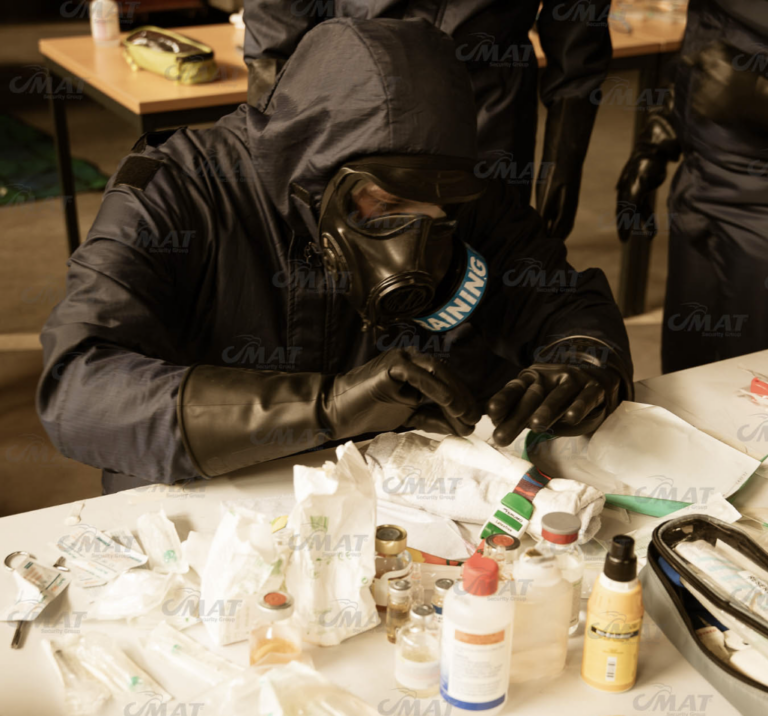
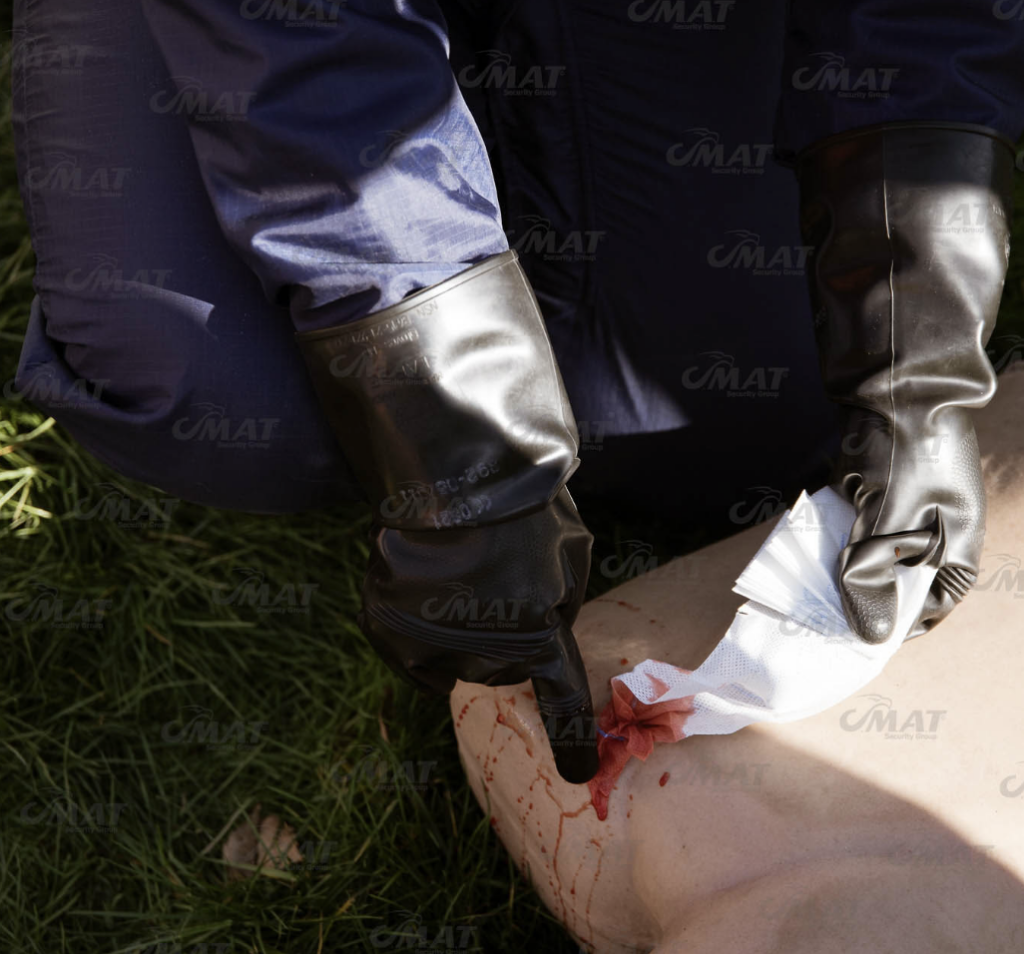
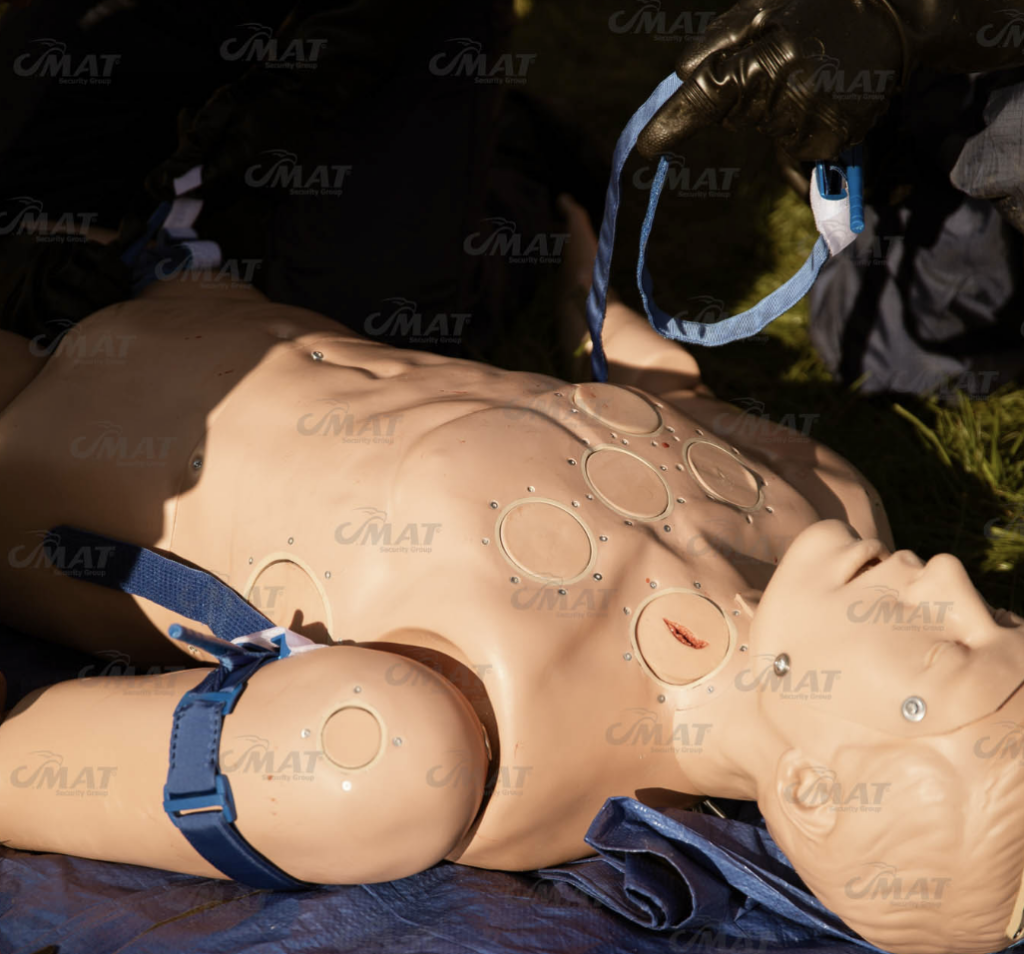
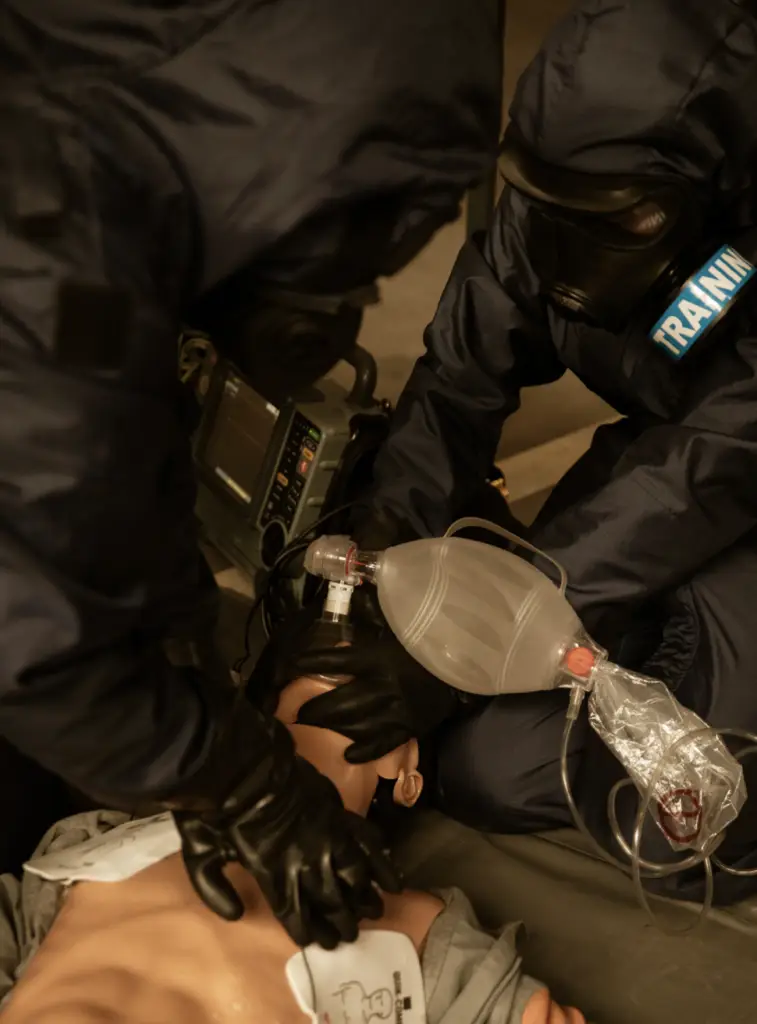
The training TECR for CBRN® Environments Prepares healthcare professionals, emergency responders, and security personnel to respond to situations involving chemical, biological, radiological, or nuclear (CBRN) hazards.
Based on an operational and medical approach, it develops the skills required to identify hazards, protect responders, manage casualties, organise decontamination, and coordinate operations in complex or degraded environments.
The programme combines theoretical instruction, practical exercises, and immersive simulations to replicate the real-world constraints encountered during CBRN incidents.
Developed by S.M.A.T.
Based on a specialised operational approach.
Technical Partner
Bachmann RDS
generously provides
a professional decontamination tentfor use during the practical training exercises
TECR for CBRN® Environments.
This technical support contributes to the realism of the training scenarios and the quality of the participants’ practical training.
I. Training objectives
The objectives of the TECR-CBRN®® training course are as follows:
- Understand the risks associated with CBRN incidents and their effects on individuals and communities.
- Acquire the skills necessary to assess, protect, treat, and evacuate victims exposed or potentially exposed to CBRN risks.
- Understand the principles of protection, triage, extraction, and decontamination in the event of exposure or suspected exposure to CBRN agents.
- Coordinate efforts with other healthcare professionals, emergency responders, and security personnel for an effective response to CBRN incidents.
- Improve the ability to make rapid, appropriate, and informed decisions in degraded or hostile CBRN environments.
II. Course content
The training TECR-CBRN®® covers the following topics, among others:
- Introduction to CBRN risks, threats, and operational contexts.
- Principles of risk recognition, contamination, and individual or collective protection.
- Use and limitations of personal protective equipment in a CBRN context.
- Initial assessment, triage, and prioritization of exposed or potentially exposed victims.
- Principles of medical care in contaminated, hostile, degraded, or constrained environments.
- Principles for the decontamination of victims, equipment, and the operational environment.
- Coordination with other emergency responders, medical teams, security services, and institutional bodies.
- Practical exercises, simulations, and evolving scenarios to strengthen skills, decision-making, and team coordination.
III. Key skills developed
The training TECR-CBRN®® aims to develop the following skills:
- Rapid recognition of CBRN hazards and assessment of the associated risks.
- Application of individual and collective protection principles in a CBRN context.
- Effective triage of victims based on severity, potential exposure, available resources, and the operational context.
- Application of management principles tailored to injuries, contamination, or suspected exposure to CBRN agents.
- Implementation of decontamination procedures to improve the safety of patients, personnel, and the environment.
- Effective communication and coordination with other emergency responders, healthcare professionals, and security personnel.
- Making rapid, structured, and appropriate decisions in CBRN emergency situations.
In Conclusion
The training TECR-CBRN®® constitutes an essential element of preparedness and response to incidents involving chemical, biological, radiological, or nuclear threats.
By developing the skills needed to assess, protect, treat, decontaminate, and evacuate victims exposed—or potentially exposed—to CBRN hazards, healthcare professionals and emergency responders can make a significant contribution to the management of critical situations.
This training focuses on an operational, realistic, and interdisciplinary approach to enhance the safety of victims, responders, and teams operating in high-risk environments.
Practical information
- Duration :
3 or 4 days, depending on the chosen format. - Number of participants :
A minimum of 6 to 7 participants, depending on the chosen format. - Location :
see calendar - Languages :
French, English - Certification : Certificate in:
TECR for CBRN Environments By : Security Institute of Ireland (SII).

- ULB Micro-certification :
applicable to sessions held on the ULB campus, provided that the participant meets the prescribed requirements for obtaining it.

- ULB Off-Campus Publications :
The procedures for recognition, validation, or micro-certification are defined according to the specific framework of the session concerned. - Prerequisites SMAT :
This training is open to professionals in healthcare, emergency services, and security, as well as anyone interested in CBRN incident response. Prior knowledge of TECC principles or equivalent experience is recommended but not mandatory. - All our group courses can be adapted on request.